Where Ambition Meets Wonder
BRAND GUIDE
Born from a region that sent humans to the Moon and built worlds of magic. A place of immense talent, fortitude, and creativity. This is the story of Central Florida.
Brand Guide v1.0
A narrative-driven event discovery platform that tells the story of a region built on ambition and wonder. From rockets to castles, from Fort Gatlin to Artemis, we help people experience Orlando through the lens of its impossible, improbable transformation.
Color Palette
Moonshots & Magic uses a restrained palette: brand primary blue, grays, blacks, and whites. Category colors are used sparingly for event classification only.
Primary Colors
Brand Primary
#0063CD
Accent, ampersand, interactive elements
Text (Dark Mode)
#FFFFFF
Primary text on dark backgrounds
Text (Light Mode)
#0A0A0F
Primary text on light backgrounds
Surface Colors
Void
#050505
Dark mode base
Surface
#121212
Dark panels
Light BG
#FFFFFF
Light mode base
Light Surface
#F8F9FA
Light panels
Category Colors (Event Classification)
Used sparingly for event badges and map markers. 13 categories: Music `#FF6B6B`, Arts `#B197FC`, Sports `#74C0FC`, Food `#FFA94D`, Tech `#69DB7C`, Community `#FFD43B`, Family `#F783AC`, Nightlife `#B197FC`, Outdoor `#69DB7C`, Education `#74C0FC`, Festival `#FF6B6B`, Market `#FFA94D`, Other `#888888`.
Typography
Oswald — Display Font
Black weight (900), uppercase, ultra-tall letters with tight tracking. Used for headers and brand lockup.
Type Scale
H1 PAGE TITLE
H1 (Page Title) — 72px, 900, Oswald
H2 SECTION TITLE
H2 (Section) — 48px, 900, Oswald
H3 CARD TITLE
H3 (Card Title) — 24px, 700, Oswald
Body text for readability and flow
Body (Base) — 16px, 400, Inter
Caption text for metadata
Caption — 12px, 400, Inter
Logo Variations
Seven logo variations designed for maximum flexibility across light/dark modes and brand contexts. The blue ampersand ( & ) is our signature accent, working in both light and dark environments.

Blue & White
Primary dark mode

Blue & Black
Primary light mode

White
All white on dark

Black
All black on light

White & Blue
Inverted blue accent

Dark
Dark variant

Dark Alt
Alternative dark
Usage Guidelines
- • Minimum width: 120px for legibility
- • Clear space: Maintain padding equal to the height of the ampersand around the logo
- • Never distort, rotate, or modify the logo proportions
- • The blue ampersand (#0063CD) is our signature accent — preserve it when possible
- • Use Blue & White for dark backgrounds, Blue & Black for light backgrounds
UI Patterns
Frosted Glass (Signature)
Translucent panels with backdrop blur — the defining visual signature of Moonshots & Magic.
Border Radius Scale
8px
SM (Chips, badges)
12px
MD (Default)
16px
XL (Large panels)
Component Patterns
Filter Chips
Timeline Dots
Image Treatment
All historical images follow a consistent black & white, high-contrast aesthetic with rounded corners.
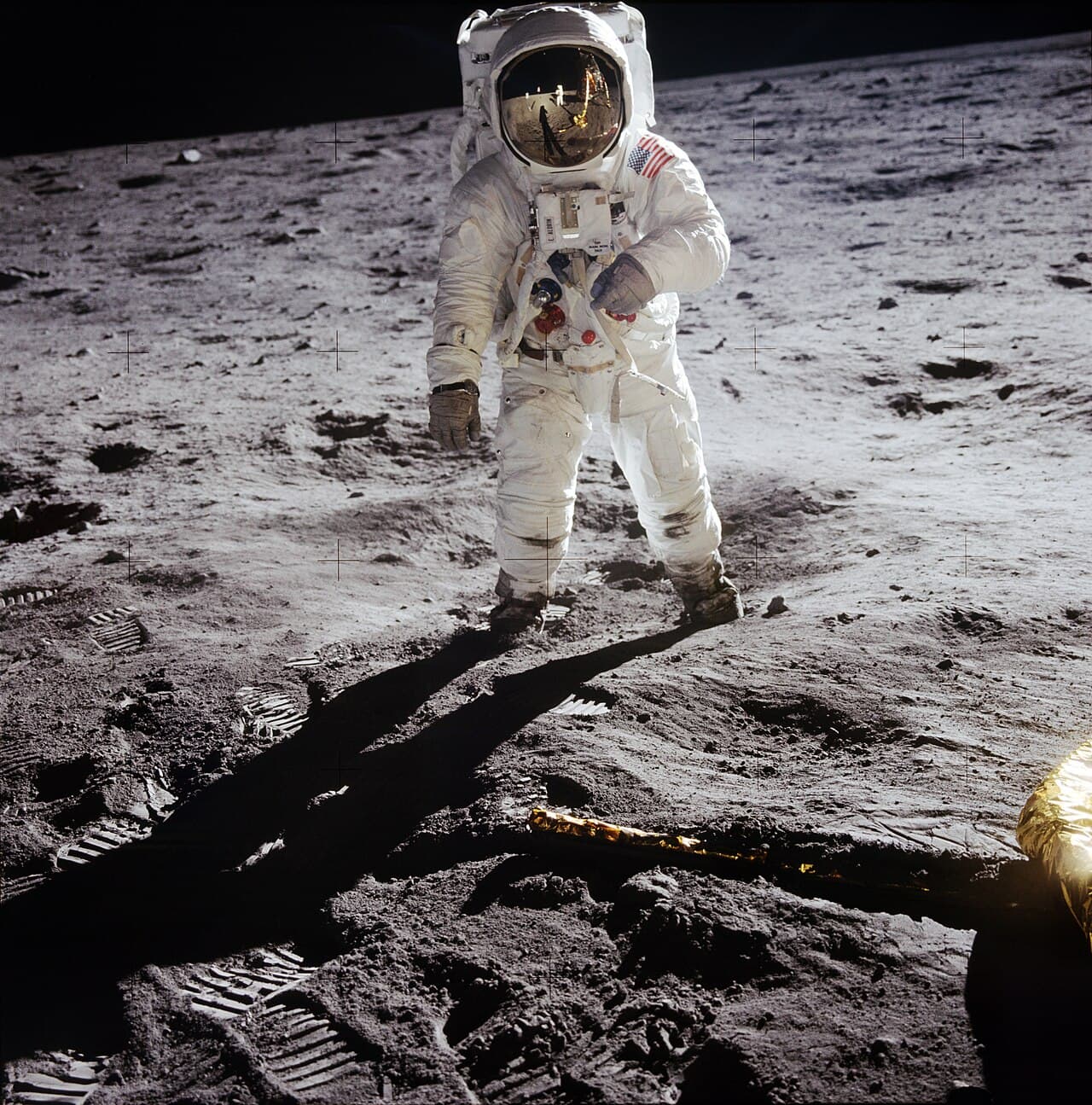
Apollo 11
1969
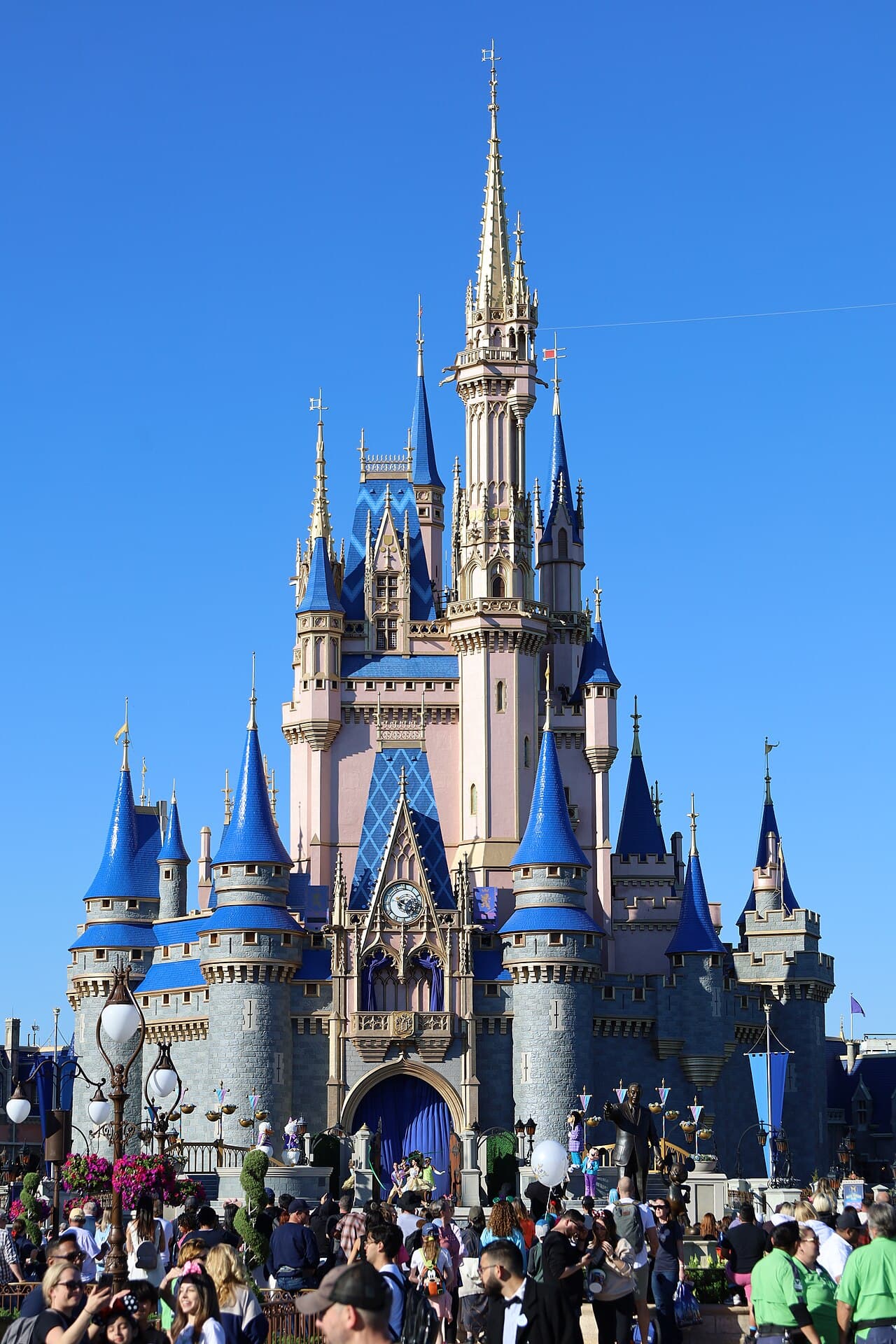
Disney World
1971
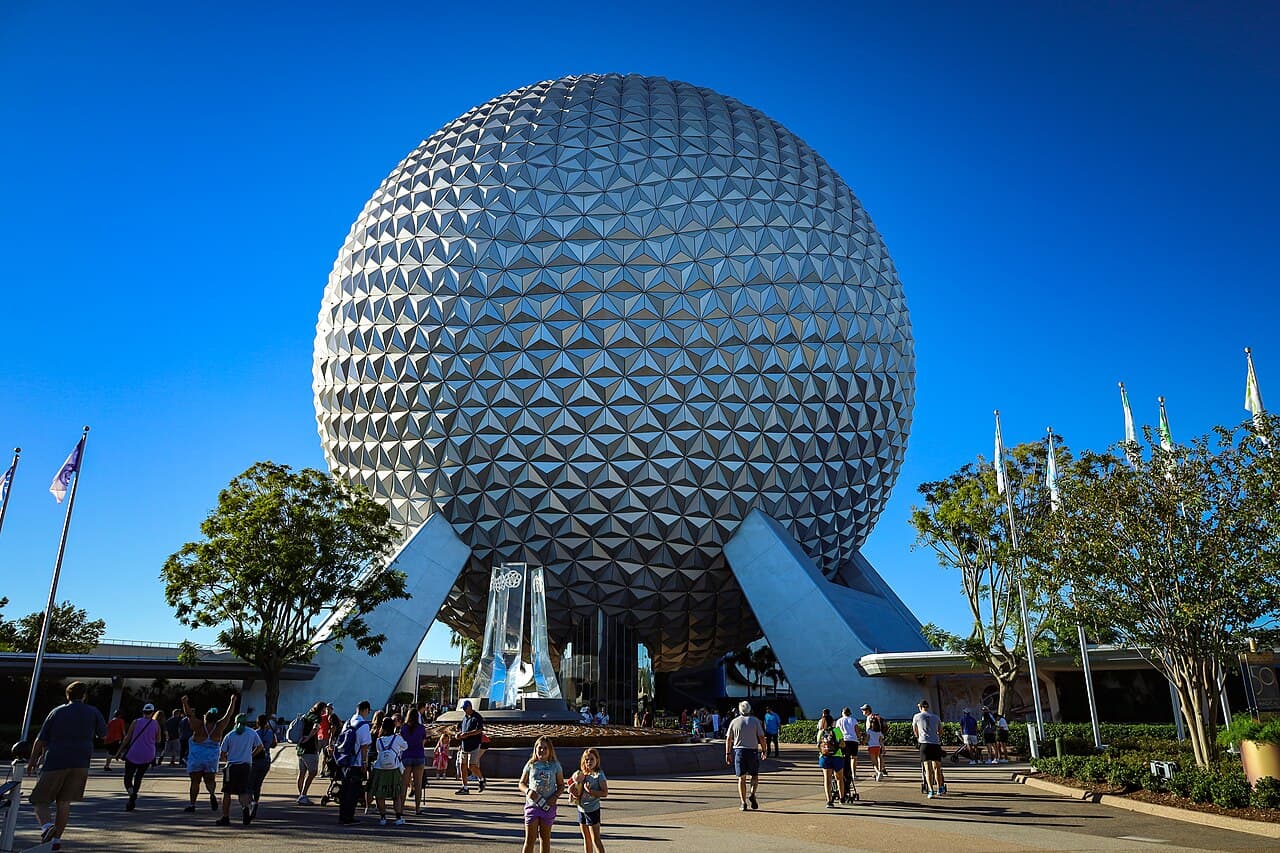
EPCOT
1982
Animations & Effects
Movement is core to the Moonshots & Magic experience. Here's our full animation vocabulary.
Pulsating Glow Effect
Timeline dots pulse continuously with varying sizes and intensities
Sparkle Particles
Magical Sparkle Effect
Blue and white particles that pulse and shimmer throughout the interface
Button States & Interactions
Primary Buttons
Icon Buttons
Loading & Progress States
Spinner
Dots
Progress Bar
Micro-interactions
Hover Scale
Glow on Hover
Scroll Reveal Pattern
Elements fade in from opacity 0 → 1
Slide up 40-60px with power3.out easing
Trigger at 85-90% viewport scroll
Timeline items scale and pulse when in view
Icon Usage
We use Lucide icons throughout the interface. No emojis — only clean, consistent vector icons.
Icon Sizes
Common Icons
Icon Colors
The Orlando Narrative
Moonshots: Cape Canaveral, Kennedy Space Center, SpaceX — the engineering audacity that put humans on the Moon.
Magic: Walt Disney World, Universal, EPCOT — the belief that wonder is engineered, not accidental.
Together: A region that marries ambition with imagination.
Fort Gatlin
Where It All Began
Before the rockets and the castles, there was swampland, pine flatwoods, and a small Army outpost called Fort Gatlin. Established in 1838 near present-day Lake Eola, it protected settlers during the Seminole Wars. The tiny settlement that grew around it would eventually be named Orlando — though nobody quite agrees on why.
The Citrus Frontier
Orange Groves to the Horizon
By the 1870s, Central Florida had found its first boom: citrus. Miles of orange groves blanketed the rolling hills around Winter Garden and Winter Haven. The railroads arrived, connecting Orlando to the rest of the nation. For nearly a century, Florida's identity was built on sunshine and oranges — a golden era that set the stage for everything that followed.
Cape Canaveral
The Launchpad Takes Shape
In 1950, the U.S. government selected Cape Canaveral as its missile testing range — a remote stretch of Atlantic coast, far from population centers, where rockets could fly east over open ocean. The first launch, a modified V-2 called Bumper 8, rose from the pad on July 24th, 1950. The Space Coast was born.
Kennedy Space Center
The Moonshot Speech
On May 25th, 1961, President Kennedy stood before Congress and declared that America would land a man on the Moon before the decade was out. It was audacious. It was improbable. It was, in every sense of the word, a moonshot. Cape Canaveral transformed overnight into the nerve center of humanity's greatest engineering challenge.
Launch Complex 39A
One Giant Leap
July 16th, 1969. Saturn V rumbled to life on Pad 39A, carrying Armstrong, Aldrin, and Collins toward the Moon. Four days later, six hundred million people watched as a human being stepped onto another world. The moonshot had landed. Central Florida had delivered the impossible — and proved that the boldest dreams aren't just worth having, they're worth building.
Walt Disney World
The Magic Kingdom Opens
Just two years after Apollo 11, another impossible vision materialized — this time in the swamplands southwest of Orlando. Walt Disney had secretly purchased 27,000 acres, twice the size of Manhattan, to build what he called the Florida Project. He didn't live to see it open, but on October 1st, 1971, the Magic Kingdom welcomed its first guests. A castle rose from the wetlands, and with it, an entire philosophy: that wonder is engineered, not accidental.
EPCOT Center
The City of Tomorrow
Walt's original vision for EPCOT wasn't a theme park — it was an Experimental Prototype Community of Tomorrow, a living city where twenty thousand people would test emerging technologies. The park that opened in 1982 was a compromise, but it carried the spirit forward: a celebration of human innovation and global culture, ringed by the World Showcase's eleven nations. Moonshots and magic, fused into a single address.
Universal Studios Florida
Stories Come Alive
Universal arrived in 1990 and pushed the frontier further — blurring the line between audience and story. Then came Islands of Adventure, the Wizarding World of Harry Potter, and eventually Epic Universe. Orlando didn't just host entertainment anymore. It redefined it. Every ride became a narrative. Every queue, a world being built around you.
Space Coast
Shuttle's Final Flight
On July 21st, 2011, Space Shuttle Atlantis touched down for the last time, ending the thirty-year Shuttle program. For a moment, the launchpads went quiet. But the Space Coast was not done. SpaceX moved into Pad 39A — the same pad that launched Apollo 11 — and a new era of commercial spaceflight began. The moonshots kept coming.
Creative Village & Downtown
The Innovation Core
Today, downtown Orlando pulses with a different kind of energy. Creative Village, UCF's downtown campus, and a growing tech corridor are rewriting the region's identity. Orlando is no longer just a tourism capital — it's becoming a hub for simulation, gaming, defense tech, and the creative industries. The same spirit that launched rockets and built castles now drives startups, studios, and makers.
Central Florida
Moonshots & Magic
Zoom out, and the full picture emerges. A region that launches rockets and builds castles. That marries ambition with wonder. From Fort Gatlin to Artemis, from a swamp outpost to a global destination — Central Florida's story is one of relentless, improbable transformation. Moonshots and Magic isn't just our name. It's the DNA of this place. And this map is your guide to everything happening in it, right now.
Voice & Tone
Do
- ✓ Use active voice and present tense
- ✓ Reference the Orlando timeline when relevant
- ✓ Connect events to the moonshots & magic narrative
- ✓ Balance technical precision with storytelling warmth
Don't
- ✗ Use corporate jargon or buzzwords
- ✗ Oversimplify the science or engineering
- ✗ Ignore the human side of the story
- ✗ Be cynical or dismissive
Quick Reference
| Element | Value |
|---|---|
| Primary Blue | #0063CD |
| Dark BG | #050505 |
| Light BG | #FFFFFF |
| Font (Display) | Oswald Black (900), ALL CAPS |
| Font (Body) | Inter |
| Border Radius | 10-16px (default: 12px) |
| Blur Amount | 24px |
| Animation Duration | 300-800ms (UI), 0.6-1.5s (scroll) |
| Grain Opacity | 4% (light), 6% (dark) |